A day in the life of: Austin Reid
A day in the life of: Austin Reid Austin, age 6 Growth condition: Silver-Russell syndrome (SRS) Typical morning: Struggling to…
Search
Q: When were you first diagnosed with SRS? What was the process like? What help and resources were available to your family at the time?
A: My family had somewhat of a working diagnosis from when I was around 6 months old all the way until I was 2. The process went from a clinical geneticist noticing some distinctive physical characteristics when I was a baby that then prompted a range of genetic tests to confirm their hypotheses.
Initially my family were offered access to the clinical genetics team in Edinburgh with any questions they may have. The charity was mentioned but due to such an large amount of new information upon my diagnosis this felt overwhelming and ultimately wasn’t something my family chose to access the support of.

A: I remember from a young age I was absolutely fascinated by the human body, as I got older and started to choose my subjects for my exams in secondary school I was focused on trying to get into medical school. This was definitely motivated by my experience as a patient. I knew if I was going to be a doctor I wanted to work in paediatrics to offer support and reassurance to other children having to spend a lot of time at hospital appointments like I had.
Eventually I realised that a career in medicine didn’t actually align with my interests, I was far more stimulated by the idea of learning about the theory of human biology and how all of the areas of study within medical science interact (genetics, pharmacology, neuroscience etc) so based on this I decided to apply to study Biomedical Sciences at university. I would say that SRS definitely provided the initial inspiration for where my future career could lead and I very much use it as my drive to make a difference in finding solutions for patients.

A: I have always been very career driven so my main focus is looking for graduate roles, hopefully within the pharmaceutical or biotechnology sector however, I am definitely open to pursuing some of my current academic interests at a postgraduate level. Recently I’ve tried to focus more on key attributes I want in my career as opposed to landing on a specific ‘dream job’ job title. I know that I will find the most fulfillment in a career that places high importance on connecting with and educating people.
One of the motivations that SRS has given from me from a career point of view is a desire to make a difference in some shape or form and prove to both myself and potentially others that a diagnosis doesn’t necessarily limit your potential to achieve.
A: University life is hectic and particularly in London where the student and young professional cultures do blend into one another, I can find myself suffering with chronic fatigue fairly often. I feel particularly lucky living in London that the public transport options are vast so as a city it is very accessible and I rarely find myself having to walk too far. I live a very independent life and now being in my final year I have a really established support system around me at university. My biggest thing that I find myself having to manage is not always being able to predict when my chronic fatigue is going to hit me, I have numerous adjustments in place with the university wellbeing service that ensure this doesn’t put me at any disadvantage however, I definitely feel frustrated sometimes that I can’t do as much or I need to take a rest day. I try my best to check in with myself and how I’m feeling and then try to plan my weeks flexibly.
A: I think I always had an awareness that I was a bit shorter than my friends and had to go into hospital fairly regularly and they didn’t have to. I’m not sure on the exact age I would have been but my earliest memory where I remember feeling different was when I was in primary school, probably aged 5/6.
In my first year of primary school, as a class bonding activity we were asked to stick a coloured strip with our name drawn on to the classroom wall at our height. I vividly remember stepping back and realizing how far below my peer’s my sticker was. I don’t remember exactly what my initial emotions were but that was definitely the first experience that I can remember feeling different to my peers. As I’ve gotten older that sense of feeling different definitely sticks with me and is something I have to work through in my head when I’m in a new environment.
A: I think there are quite a few misconceptions following someone from the general public’s initial impression of me however, it’s hard to identify misconceptions about SRS due to the condition being so rare and most member of the general public wouldn’t have heard of it. When I was younger, due to being smaller most people definitely assumed I was younger than I was, as I’ve gotten older and facially matured this happens a lot less. However, I find that people do stare sometimes in public but it’s something you get used to.
I would say I have a few main things I wish people knew and are often the first things I tell people as they get to know me: one is the fact that my height really isn’t the aspect of my condition that impacts me the most. Yes I do get a few stares, find it difficult to reach things but the thing I struggle with the most is my chronic fatigue. Another massive point is that people do like to put me under the ‘dwarfism’ umbrella term, which absolutely in the right context is correct due to me being short in stature, however I do think many people expect me to have had the same experiences as someone with achondroplasia, a form of dwarfism with far more public representation and for the most part this simply isn’t the case. Finally, I genuinely don’t mind being asked a question about my condition if it comes from a place of genuine curiosity and is in an appropriate situation. In my experience giving people a little bit more knowledge is only a positive thing!

A: I’ve personally never found this frustrating, in fact I feel extremely grateful to be in the position and comfortable enough with myself and my condition to share my experiences. By talking about my experience in the context of offering advice it gives me a perspective that allows me to process some of my thoughts and feelings about my experiences in a more neutral way. I find being able to share my stories, hopefully offer some support to individuals affected by the condition and also educate those who aren’t as familiar with SRS to be incredibly cathartic.
I think we often talk about representation on a larger scale like in the media or within large corporations however, very rarely is it discussed on a more personal level. The idea of walking into a room and feeling like nobody looks the same as you is an important one to address when talking about representation. On a personal level, sometimes I can really get in my own head about this but more often than not I use it as my motivation to go to events as I always think maybe I’ll make someone else in the room feel more comfortable to be there.
I would absolutely love to see more people who look like me on adverts and in films but smaller scale representation is far more important for giving people the confidence to enjoy their everyday lives.

A: I personally first became aware of the charity when I was involved in an event with the University of Edinburgh’s Institute of Genetics and Cancer titled ‘Shining A Light on Silver-Russell Syndrome.’ Myself and my clinical geneticist Professor Mary Porteous delivered a Q&A with one another and then representatives from the CGF (Chair of Trustees Jeff Bolton and Medical Advisor Dr Emma Wakeling) shared some of the charity’s work with the audience.
I would say the most impactful work the charity does is creating a space where families can access support and ask questions that has a community and more relaxed feel to it. Currently the charity really does go above and beyond for families and patients with growth conditions however, the main thing I think would be great is if there was a way they could offer a platform in which young people could talk to each other more informally. I know this isn’t for everyone and I think even I would have been nervous to talk about how I felt with someone I didn’t know, however many young people often feel more comfortable talking to someone they don’t know as well.
A: There are so many pieces of advice or even just reassurance I feel I could give particularly when I think of my younger self so I’ve narrowed it down to 3:
In terms of advice I could give to parents of a child, I asked my mum what she thought and from everything she suggested this was the piece of advice she would give that resonated most with me. It’s really important, particularly in the early days, to take everything one day at a time as it will feel like a lot of information to take in. You need to recognise that it is a life changing diagnosis for the whole family/ your child’s support network and it will affect everyone in different ways.
Focus on the positives of what your child CAN do and try to give them enough confidence to go out into the world. Make sure as much as you can to equip them with the tools to cope with the challenges of the world, as young people they have a world of potential to fulfill that shouldn’t be limited by such a diagnosis.
A day in the life of: Austin Reid Austin, age 6 Growth condition: Silver-Russell syndrome (SRS) Typical morning: Struggling to…

By Freya's mum Krista, November 2022Recently my husband and I had the opportunity to attend the Child Growth Foundation Convention…
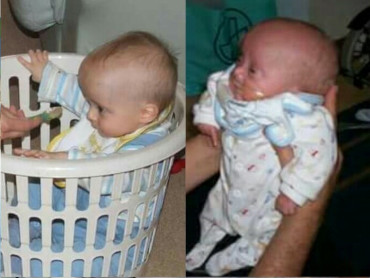
Toby's StoryOur son Toby was born premature in July 2007, he has a diagnosis of severe IUGR/ SGA, a clinical…